
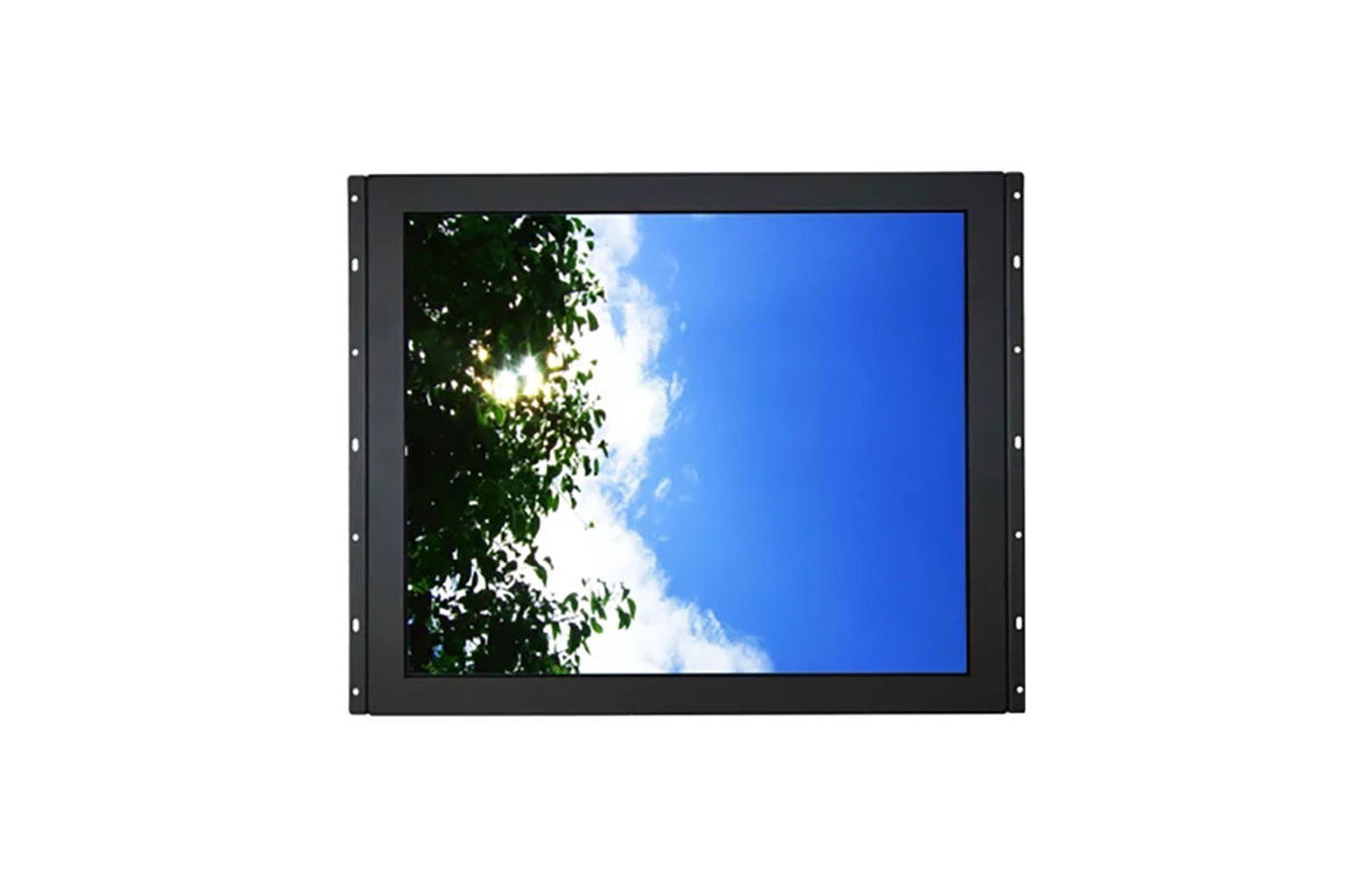
Industrial displays refer to equipment used in industry, which is very different from ordinary displays. The structural materials of industrial displays are generally made of aluminum alloy, which has good heat dissipation performance. Industrial displays have high requirements on the environment. Displays must not only adapt to various industrial environments, but also maintain stable operation.
1. The brightness of industrial displays
Since most flat panel displays are used in indoor environments, the brightness is about 250~300Ccd/m2 (nits), and LCDs with a diagonal size of 15 inches are commonly used. However, a display with this level of brightness cannot meet the requirements for use in an industrial environment, because the ambient light will be stronger, and its brightness will easily exceed the brightness of the LCD backlight. Also, frequent use of touch screens in industrial environments can also reduce the brightness of industrial displays, making them look darker. In general medical, industrial and public telephone booth applications, the brightness required is at least 450 cd/m2, and a response time of less than 30ms in consumer displays is sufficient. However, in the field of industry, medical treatment and gaming, users can feel the movement in the dynamic content environment, which requires that the LCD should have a faster response time.
2. Ideal 450:1 contrast ratio
Industrial monitor contrast is not primarily for direct viewing like consumer monitors, and for industrial monitors, the user may not be viewing at an optimal distance or under ideal lighting conditions. Therefore, industrial displays with higher contrast ratios are the best choice. For 10.4-inch, 12.1-inch or 15-inch displays used in most industrial fields, a contrast ratio of 450:1 is ideal.
3. Industrial display color
In some industrial applications, special color information is more important than text or numbers, and it is very important to use the measured color as a percentage of NTSC color saturation for comparison. In industrial displays, the color saturation is completely dependent on the influence of the backlight. CCF backlight is a very popular technology and can reach 70% and 80% of the NTSC color saturation. In some applications, this range is still not wide enough, and it is sometimes necessary to achieve a range close to 100% of NTSC color saturation. This full color saturation is typically achieved with LED backlighting in LCD products.
4. Wide viewing angle
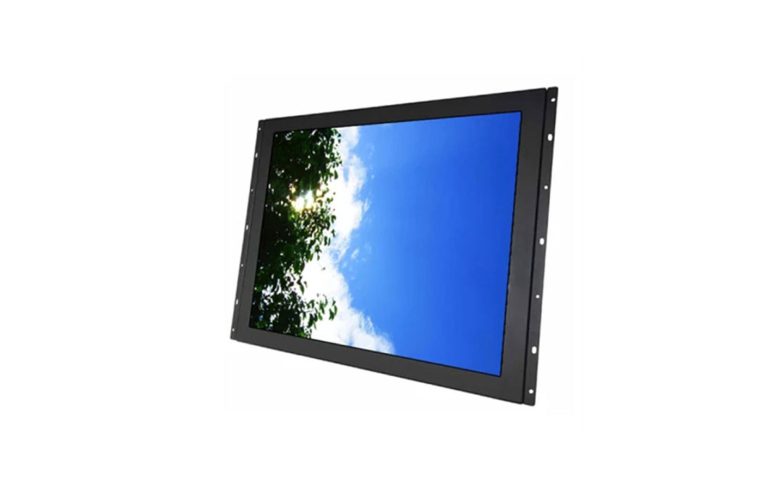
Industrial monitor viewing angle and commercial consumer monitors are usually designed for single person use sitting directly in front of the monitor, which is very rare in most industrial applications. Working directly in front of a monitor is nearly impossible on a large machine, especially if there are multiple monitors, all facing the viewer at different angles. Displays should have wide viewing angles or be considered “one-swipe to understand what’s displayed,” which is generally not the case with consumer industrial displays. This is because they use twisted nematic technology, so the viewing angle is limited. In order to better adapt to industrial applications, the display is required to have a wide viewing angle.
5. The mechanical properties of industrial displays
Like many technologies, there are also design changes in global flat-panel LCD products. In industrial-grade panels, such changes may occur every five years or more. Changes occur because of the need to adapt to technological changes. Progress or better designs emerge. Therefore, it is very important to maintain a certain level of continuity when designing industrial and medical equipment. This includes the same mounting holes, connector locations, and even some of the same industrial computer monitor dimensions. When the display changes within five years, the end product can have a 10-year life cycle. It helps to consider some standard specifications as well as the company’s design strategy before choosing a display. In contrast, consumer displays can change every six months, making them difficult to use in applications that require configuration control.
.6 Industrial display lifetime
It is rare for a consumer in the industrial market to find a display that is guaranteed to work for 10 years, whether it is in a phone booth or a display terminal on an oil rig. Manufacturers can provide industrial computer monitors with a life cycle that meets or exceeds 10 years, but most manufacturers of industrial-grade monitors will produce at least 3 years, and the actual supply time can last at least 5 years. 7. Vibration damping for industrial displays. In many end products such as handheld or portable devices, vibration testing is often required to ensure that the device can be used in commercial or emergency response vehicles. Vibration damping is very important in these applications because it allows the designer time to design the final product.